


The Haussmannian Revolution: Transforming Paris into the City of Light
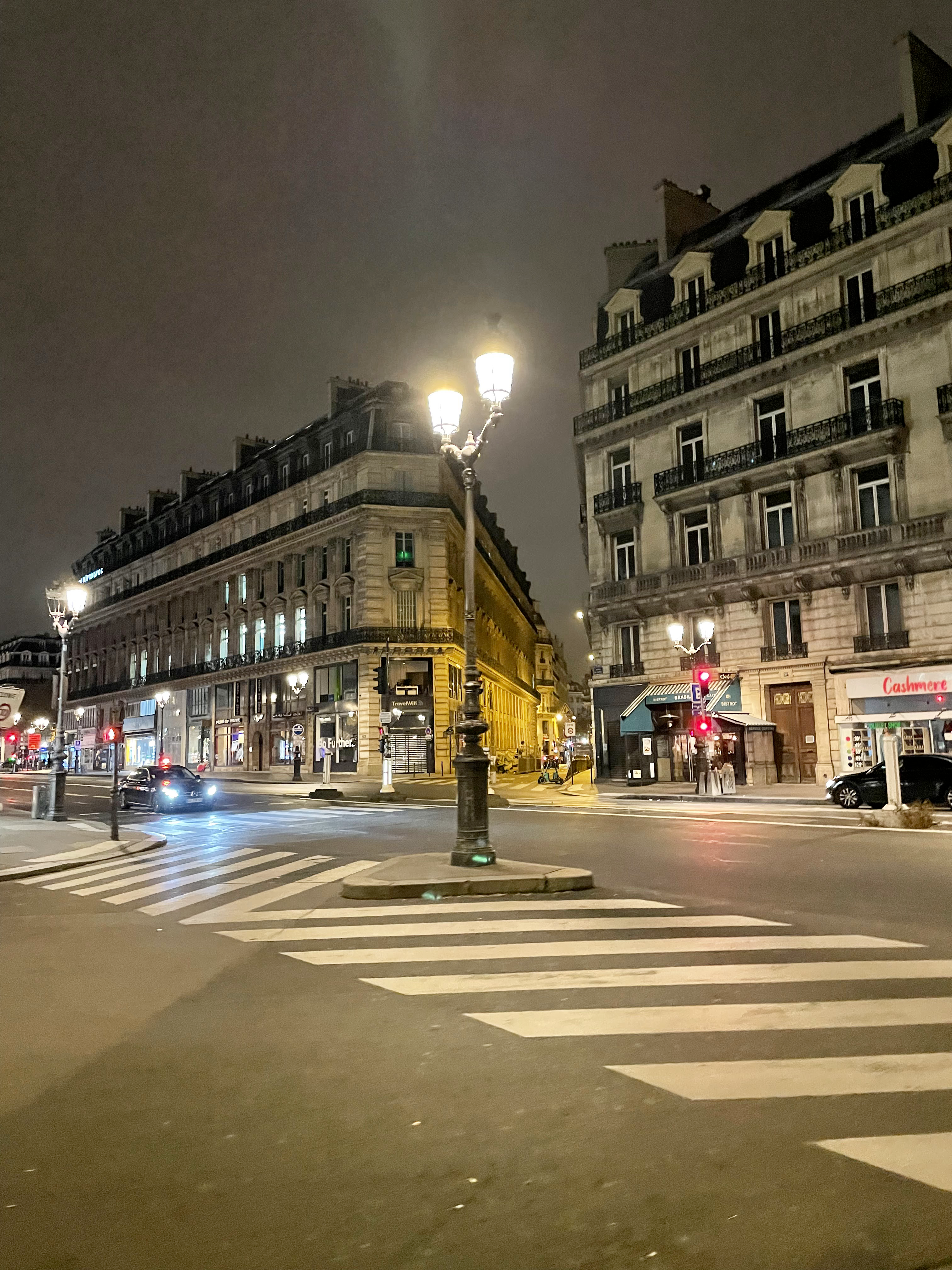
Avenue de l'Opéra, the Haussmanian masterpiece.

Contents
[show]
In the heart of Paris, amidst the bustling cafes and the shimmering Seine, lies a legacy of stone and mortar that has come to define the very essence of the city: Haussmannian architecture.
The grand transformation of Paris, carried out in the second half of the 19th century under Emperor Napoleon III and led by Prefect Georges-Eugène Haussmann, not only reshaped the city’s physical landscape but also its cultural identity.
The Origins of Haussmann’s Paris
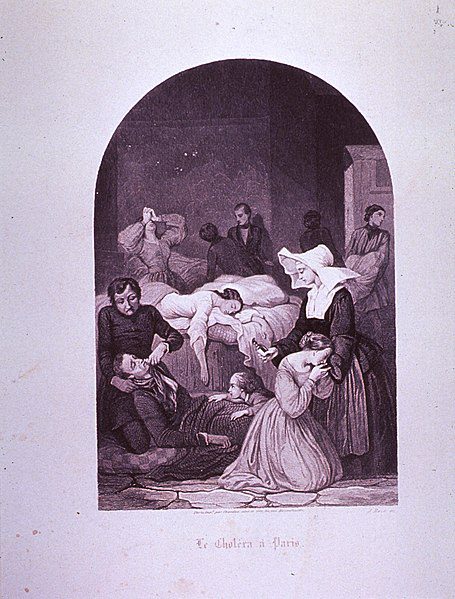
The story of Haussmannian architecture begins in the 1850s, a time when Paris, though rich in history and culture, was grappling with the problems of medieval urban planning: narrow, winding streets, overcrowded neighborhoods, and a lack of sanitation that often led to devastating epidemics (notably, the Cholera in 1832, the “blue fear”, that killed more than 18 000 parisians in a few months).
Napoleon III, inspired by his exile in London (a more recent city, completely rebuilt after the 1666 fire), envisioned a modern, healthier, and more accessible Paris. To realize this vision, he appointed Georges-Eugène Haussmann.
Georges-Eugène Haussmann: The Architect of Modern Paris
Haussmann, born in Paris in 1809, was a man of unwavering determination and vision. With the full support of Napoleon III, he embarked on what would become one of the most ambitious urban renewal projects in history. As a “Préfet de la Seine” between 1853 and 1870, Haussmann oversaw a total overhaul of Paris.
The works, characterized by their ambition and meticulous execution, included not only the construction of new boulevards and buildings but also a comprehensive modernization of the city’s infrastructure. This section delves deeper into the monumental works and the most spectacular realizations of the Haussmannian era.
Haussmann’s vision was to facilitate the flow of people, goods, air, and water. He was convinced by the hygienist theories inherited from the Enlightenment, which spread following the cholera epidemic of 1832. This campaign was entitled “Paris Embellished, Paris Enlarged, Paris Sanitized.”
The Hallmarks of Haussmannian Paris
The Haussmannian buildings
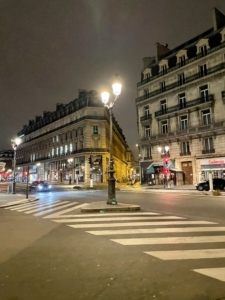
Haussmannian buildings, characterized by their uniform facades, wrought-iron balconies, and consistent alignment, brought elegance and harmony to Paris’s streets.
A typical Haussmannian building is a study in elegance and uniformity. These buildings, usually five or six stories high, feature a stone facade, wrought-iron balconies on the second floor (the ‘noble floor’), and a consistent alignment that contributes to the harmonious appearance of the streets. The ground floor often housed shops, with the space above reserved for apartments. The interiors were just as meticulously designed, with high ceilings, parquet flooring, and elaborate moldings.

Creating the Grands Boulevards
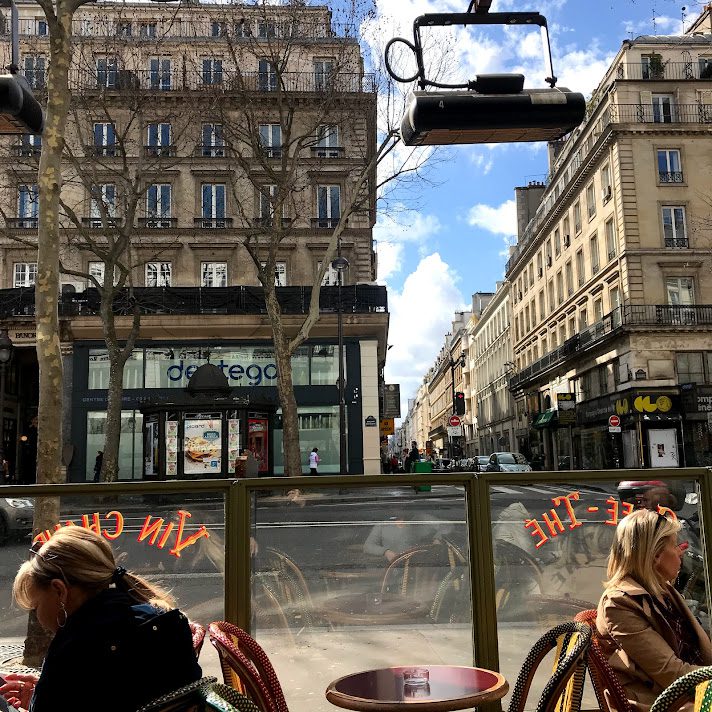
Perhaps Haussmann’s most visible legacy is the network of wide boulevards and avenues that now crisscross Paris. The Boulevard Haussmann, stretching over two kilometers and home to the famous department stores Galeries Lafayette and Printemps, is a prime example. These grand boulevards were not just thoroughfares; they were designed as spaces of leisure and spectacle, lined with trees and offering unobstructed views of the city’s monuments.
The boulevards, such as Boulevard Saint-Germain, Saint Michel, Sebastopol, Haussmann, Malesherbes, and many others, facilitated traffic flow and opened up the city. These boulevards were lined with uniform Haussmannian buildings, creating a cohesive architectural aesthetic.
The Transformation of Parisian Streets and Sidewalks
Under Haussmann’s plan, the streets of Paris were not merely routes from one place to another; they became integral parts of the city’s social fabric. Sidewalks were widened to accommodate the flow of pedestrians, and gas lamps were installed, illuminating Paris like never before and confirming its nickname “City of Light” (earned about 2 centuries earlier, when the king Louis XIV decided to place lanterns on almost every main street and ask the residents to light their windows with candles and oil lamps).
The creation of public squares and parks, such as the Place de l’Étoile (now Place Charles de Gaulle) and the Parc Monceau, introduced green spaces that offered Parisians respite from the urban environment.
Monuments, parks and squares
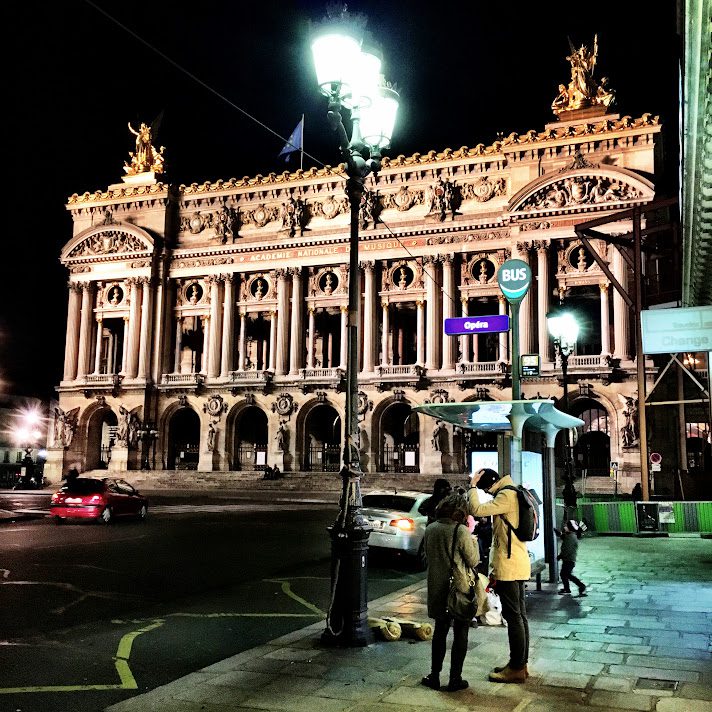
Opera Garnier: Commissioned by Napoleon III as part of Haussmann’s works and designed by Charles Garnier, the Opéra Garnier is a masterpiece of Second Empire architecture. Its grandiose style, intricate details, and the use of new materials like steel and glass marked it as one of the era’s most spectacular realizations.
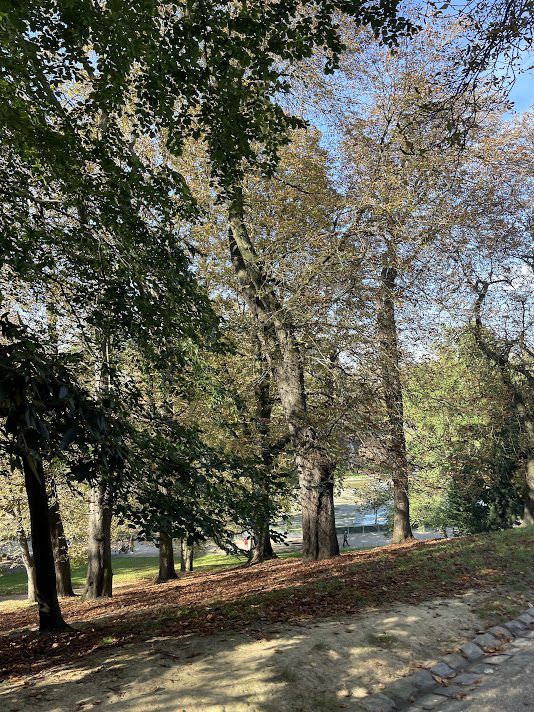
Parks and Squares: Haussmann and his team designed several new parks, including Parc Monceau and Pard Monstouris, Champs-Elysées Garden, Bois de Boulogne, Bois de Vincennes, and many others, transforming them into landscaped havens for leisure and recreation. These green spaces were crucial to Haussmann’s vision of a healthier city.
Revolutionizing Paris’s Infrastructure
- Sewer System: One of Haussmann’s most critical and innovative projects was the expansion and modernization of Paris’s sewer system. This vast network, stretching over 600 kilometers by the end of the Haussmann era, dramatically improved the city’s sanitation and public health, and remains a marvel of civil engineering.
- Water Supply: The construction of aqueducts, such as the Aqueduct of the Vanne, significantly enhanced Paris’s water supply, ensuring clean water for its growing population and fountains.
- Gas Lighting: The introduction of gas street lighting transformed Paris into the “City of Light,” enhancing the safety and ambiance of the streets and enabling a vibrant night-time culture.
- Public services : The Gare de Lyon, Gare Montparnasse, Gare Saint-Lazare and the Gare du Nord are also part of the haussmanian heritage, “Les Halles” central market of Paris was totally renovated, the city halls of the 1st, 3rd, 4th, 7th, 11th and 14th arrondissements… The list is endless !
A Legacy that Endures
Today, Haussmannian architecture is synonymous with Paris itself. While Haussmann’s methods and the scale of his transformations were controversial at the time, leading to his dismissal in 1870, the beauty, functionality, and modernity of his Paris have stood the test of time. The city’s layout, its iconic buildings, and its open spaces continue to captivate both Parisians and visitors from around the world.
The Haussmannian operations were not without their challenges and criticisms. The demolition of old neighborhoods and the brutal displacement of tens thousands of Parisians sparked controversy and resistance. However, Haussmann navigated these challenges with a combination of political support and sheer determination, negotiating the delicate balance between preservation and progress.
Welcome to “La ville des lumières”
The Haussmannian renovation of Paris was more than just an urban renewal project; it was a reimagining of urban living, a blend of aesthetics, public health, and social engineering that transformed Paris into the epitome of a modern city. As we walk the broad avenues, admire the uniform facades, and enjoy the vibrant public spaces of Paris, we walk in the footsteps of Haussmann and Napoleon III, who together envisioned a city that was not only the pride of France but a beacon to the world.
Through the stone and mortar of Haussmannian Paris, we discover not just a style of architecture, but a philosophy of urban space that continues to influence city planning worldwide.
The scale and scope of Haussmann’s achievements — from the sewers beneath the streets to the majestic Opera Garnier — are a testament to the boldness of his vision and the transformative power of architecture and urban planning. As we walk through the wide avenues, relax in the lush parks, or marvel at the grandeur of the Opera, we experience the living legacy of Haussmann’s Paris — a city reborn, timeless in its beauty and ever-evolving in its identity.
To learn more about it, the Wikipedia article about Haussman’s renovation of Paris is a very good starting point
And if you’d prefer to watch a video, this one (in french, but you can activate the subtitles) is very clear and informative :





[…] Yes, Montmartre is worth a morning walk. And going down to the Grands Boulevards to visit the Galeries Lafayette and the Palais Garnier is the best way to feel the true atmosphere of Haussmanian Paris ( Don’t know what Haussmanian Paris is ? We have a complete article here ). […]