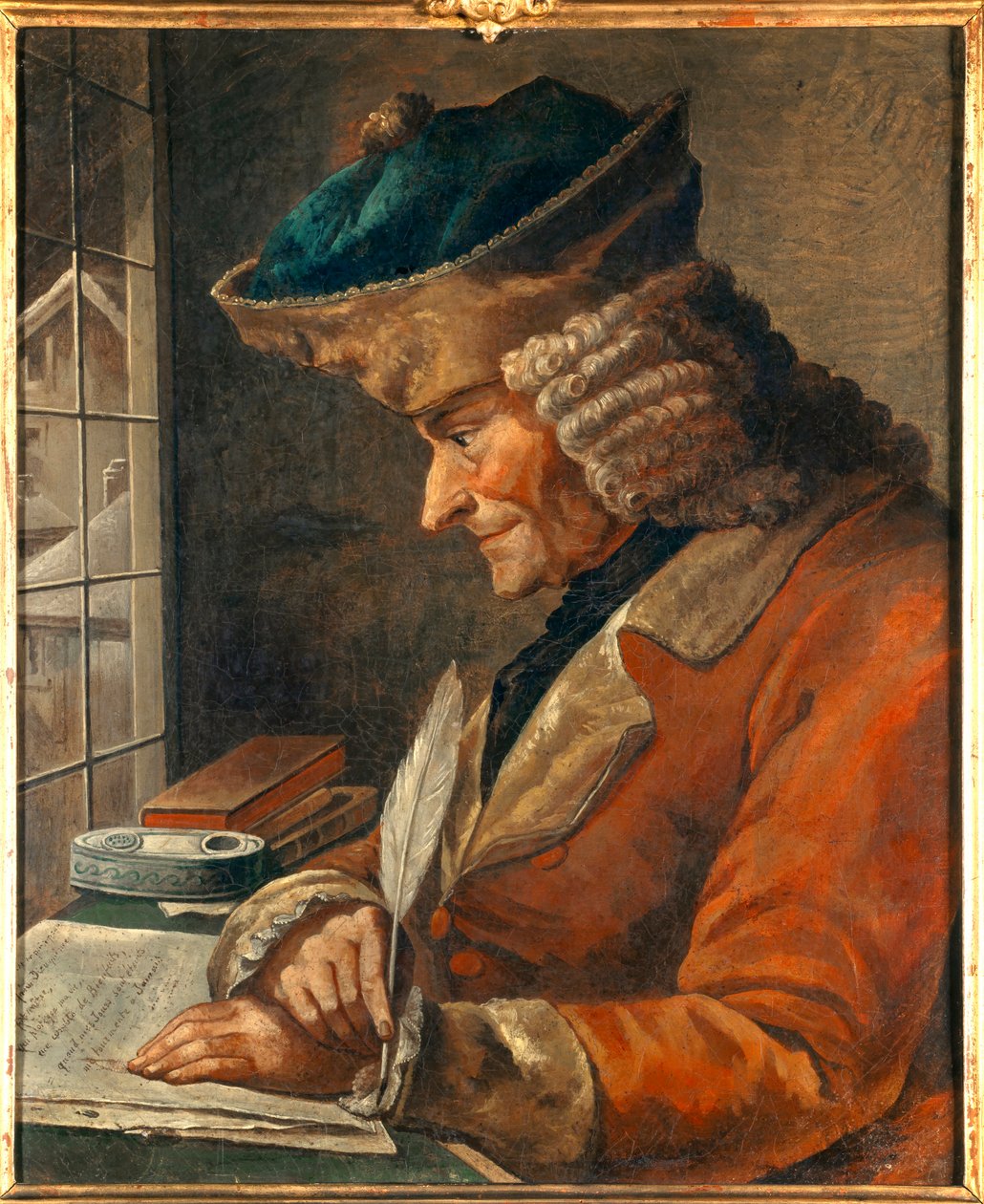
Voltaire, or the Great Thrill of Parisian Insolence

Table of Contents
Do not look for the heart of the Parisian spirit in dusty history books: it crystallized one November evening in 1694, in an alleyway now vanished near Châtelet. The man who would make the Europe of kings tremble under the name of Voltaire was not a bedroom philosopher, frozen in his concepts. He was a scholar of the cobblestones, a regular in cozy salons, and a born provocateur. Walking through our beautiful capital in his footsteps means taking a one-way ticket to the Age of Enlightenment, irony, and pure freedom.
Three stops engraved in Parisian stone
1. Rue de la Vieille-Draperie: Being Born in the Heart of the Tumult
Voltaire needs no introduction, a totemic figure of French literary heritage. Yet, we often forget that the kid was a pure bourgeois “titi”. It was here, on the Île de la Cité (at the exact location of the current Commercial Court), that he uttered his first cry. Son of a notary from Châtelet, he quickly refused the straight trajectory his father mapped out for him. No lawyer’s robes for him! He wanted the quill, the theater, the risk. Even if it meant tasting the cells of the Bastille—twice rather than once!—for a few verses a bit too sharp about the Regent’s love life. Paris educated him through censorship; he answered with genius.
2. Café Procope: Forty Cups and a Revolution
Let’s slide towards the Left Bank, on Rue de l’Ancienne-Comédie. Push open the door of the Procope. In the oldest café in the world, Voltaire had his headquarters. It is rumored that he drank up to forty cups a day of a brew of his own making: a blend of coffee and chocolate. Imagine the atmosphere: the room is saturated with smoke, Diderot loses his temper, d’Alembert calculates, and Voltaire, with a murderous witticism, dynamites the certainty of the era. The spirit of the Revolution brewed right here, between two cups of black coffee.
3. 27 Quai Voltaire: The Apotheosis and the Final Breath
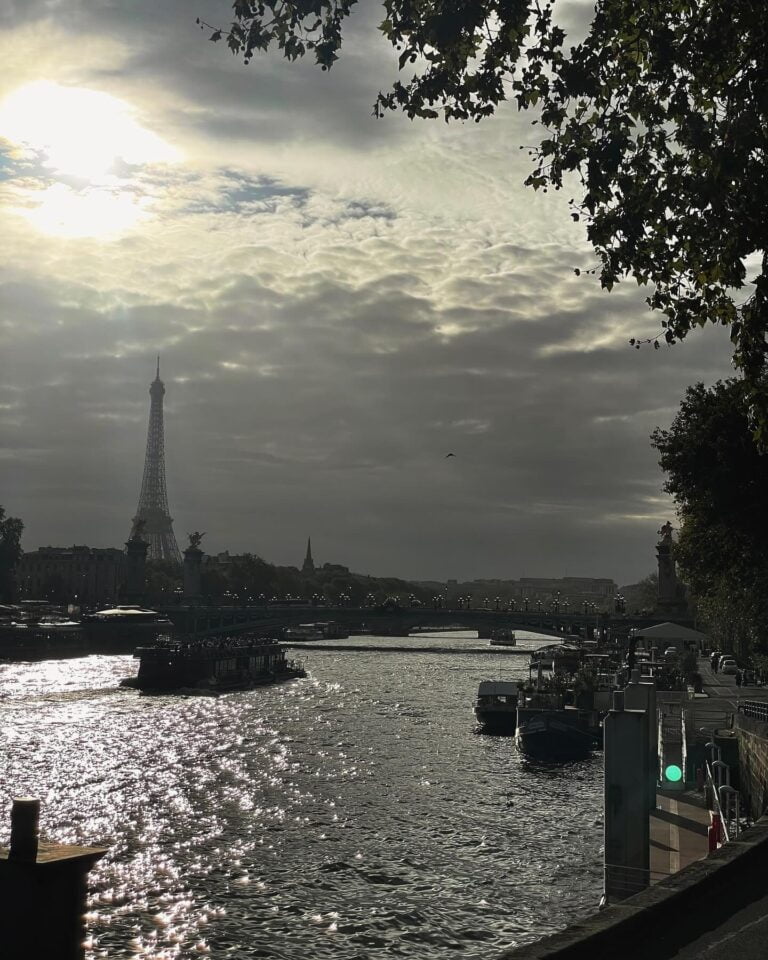
The embankment that today bears his name was the stage for his ultimate masterpiece: his own death. After 28 years of exile far from his beloved Lutetia, Voltaire made a triumphant return here in February 1778 to attend rehearsals for his play Irène. Received like a true republican monarch, he moved into the Hôtel de Villette. Exhausted by the honors and the emotion of seeing his city again, he died there on May 30. The crowd gathered under his windows for days, mourning the man who had elevated tolerance into a cardinal virtue.
The Scholar’s Library: Works to Re-read on Gallica
To immerse yourself in this biting irony, forget modern editions. Thanks to the Bibliothèque Nationale de France, dive directly into the digitized original texts:
- Candide ou l’Optimisme (1759): The definitive philosophical tale that shatters the illusion that “all is for the best”.
- Treatise on Tolerance (1763): A vibrant plea against religious fanaticism, written in the wake of the Calas affair, and remaining highly relevant today.
- Philosophical Letters (1734): The clandestine book that sparked the scandal, condemned to be burned at the foot of the great staircase of the Palace of Justice in Paris.
Voltaire, or the Great Thrill of Parisian Insolence
Do not look for the heart of the Parisian spirit in dusty history books: it crystallized one November evening in 1694, in an alleyway now vanished near Châtelet. The man who would make the Europe of kings tremble under the name of Voltaire was not a bedroom philosopher, frozen in his concepts. He was a scholar of the cobblestones, a regular in cozy salons, and a born provocateur. Walking through our beautiful capital in his footsteps means taking a one-way ticket to the Age of Enlightenment, irony, and pure freedom.
Three stops engraved in Parisian stone
1. Rue de la Vieille-Draperie: Being Born in the Heart of the Tumult
Voltaire needs no introduction, a totemic figure of French literary heritage. Yet, we often forget that the kid was a pure bourgeois “titi”. It was here, on the Île de la Cité (at the exact location of the current Commercial Court), that he uttered his first cry. Son of a notary from Châtelet, he quickly refused the straight trajectory his father mapped out for him. No lawyer’s robes for him! He wanted the quill, the theater, the risk. Even if it meant tasting the cells of the Bastille—twice rather than once!—for a few verses a bit too sharp about the Regent’s love life. Paris educated him through censorship; he answered with genius.
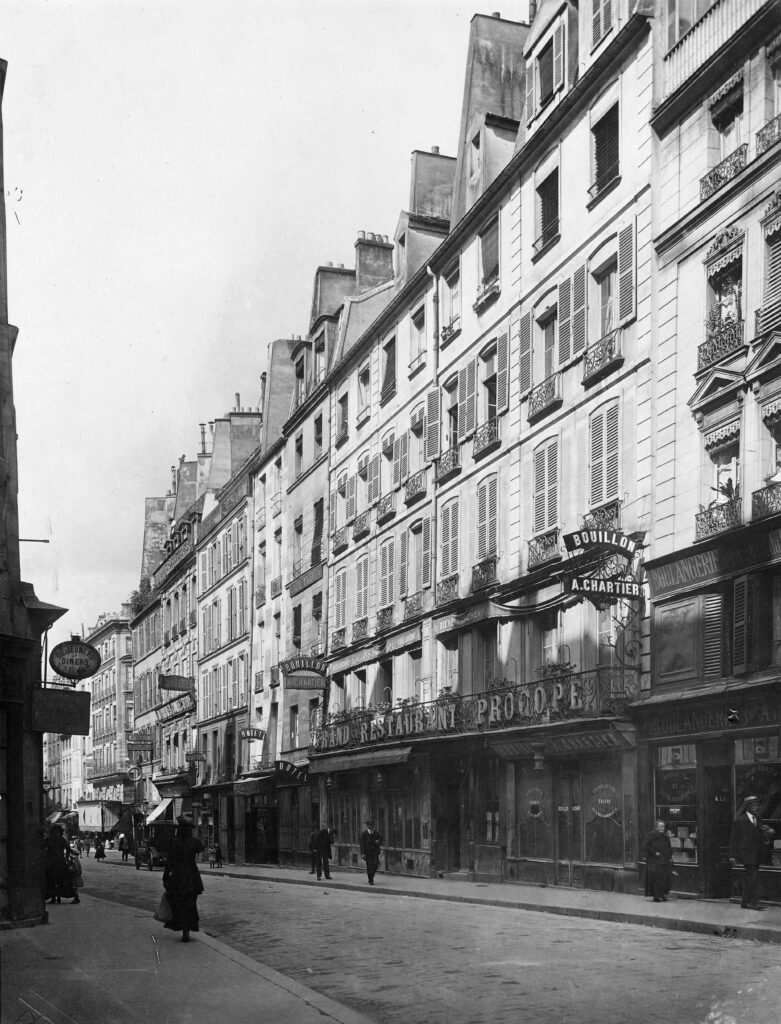
2. Café Procope: Forty Cups and a Revolution
Let’s slide towards the Left Bank, on Rue de l’Ancienne-Comédie. Push open the door of the Procope. In the oldest café in the world, Voltaire had his headquarters. It is rumored that he drank up to forty cups a day of a brew of his own making: a blend of coffee and chocolate. Imagine the atmosphere: the room is saturated with smoke, Diderot loses his temper, d’Alembert calculates, and Voltaire, with a murderous witticism, dynamites the certainty of the era. The spirit of the Revolution brewed right here, between two cups of black coffee.
3. 27 Quai Voltaire: The Apotheosis and the Final Breath
The embankment that today bears his name was the stage for his ultimate masterpiece: his own death. After 28 years of exile far from his beloved Lutetia, Voltaire made a triumphant return here in February 1778 to attend rehearsals for his play Irène. Received like a true republican monarch, he moved into the Hôtel de Villette. Exhausted by the honors and the emotion of seeing his city again, he died there on May 30. The crowd gathered under his windows for days, mourning the man who had elevated tolerance into a cardinal virtue.
Voltaire in 5 Key Dates
- November 21, 1694: Born in Paris, at the very heart of the city’s hustle and bustle.
- 1718: Triumph of Œdipe at the Comédie-Française. The young Arouet becomes “Voltaire”.
- 1726 – 1729: Exile across the Channel. The philosophical awakening of a free man.
- 1759: Clandestine and incendiary publication of Candide.
- May 30, 1778: Triumphant return and final breath in Paris, on the embankment that would later bear his name.
To go further: Discover the complete encyclopedic page on Wikipedia
The Scholar’s Library: Works to Re-read on Gallica
To immerse yourself in this biting irony, forget modern editions. Thanks to the Bibliothèque Nationale de France, dive directly into the digitized original texts:
- Candide ou l’Optimisme (1759): The definitive philosophical tale that shatters the illusion that “all is for the best”.
- Treatise on Tolerance (1763): A vibrant plea against religious fanaticism, written in the wake of the Calas affair, and remaining highly relevant today.
- Philosophical Letters (1734): The clandestine book that sparked the scandal, condemned to be burned at the foot of the great staircase of the Palace of Justice in Paris.